
“Your judo mats look the same as the ones in this other quote. Why are yours more expensive?”
I think that’s a fair question. If I were spending my own money on a dojo floor, I’d ask it too. In the workshop, I’d put two samples on the table, hand you a tape measure, and turn both mats over. Then I’d show you a cutaway. A catalog photo can show you the color. With a cutaway in your hand, you can see where the money goes.
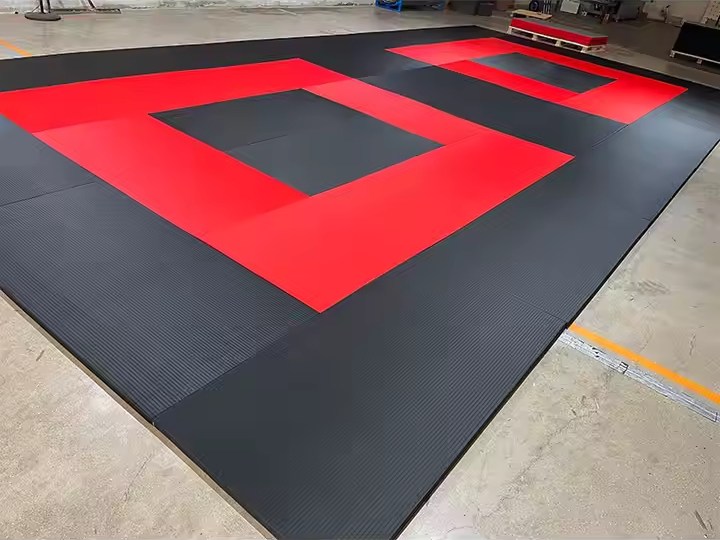
I work with a factory that has been making mats for more than 30 years. The full-size tatami mats I’m talking about here are our 2 m × 1 m panels, with a compressed foam core, a PVC vinyl cover, and a rubber-coated backing. If you’re comparing a judo training mat for daily classes or flooring for a BJJ or MMA gym, here’s what I’d look at with you.
A short look at the samples in our workshop.
Both samples were sold in the 40 mm class. In our workshop comparison, one came in at about 37 mm. For our version of this mat, we build to a 41 mm specification. Four millimeters can be hard to spot in a photo, but I’d want you to know about that difference before you buy a roomful or try to match an existing floor. Ask each supplier to put the finished thickness and tolerance on the quote.
If you’re shopping in the U.S. for 1.5-inch tatami mats or 2-inch tatami mats, ask for the exact dimension in millimeters. Those labels can be rounded in listings. I’d rather compare your existing mat with a sample now than have you find a step at the seam when the order arrives.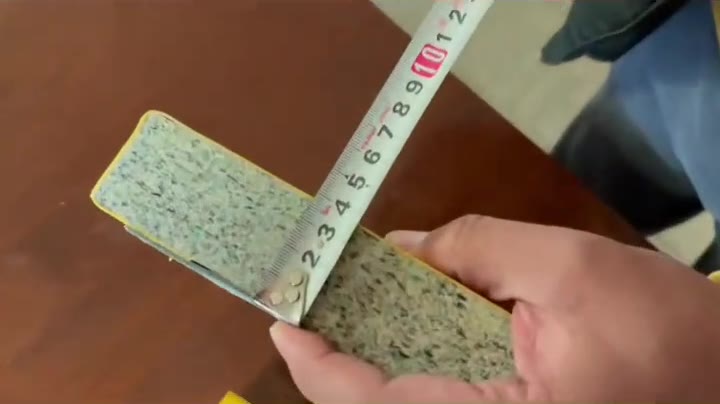
Checking the thickness at the sample edge.
When I press a foam sample, I pay attention to how it comes back after I let go. Some rebonded samples I’ve handled felt hard under my thumb and recovered slowly. Rebonded foam can vary, so I’d compare the samples side by side. Our mat uses high-density compressed foam in our 230 density grade. I can show you the cutaway and go through the foam specification with you. If you’re buying for an IJF event, ask me for the documentation for the exact model you’re considering.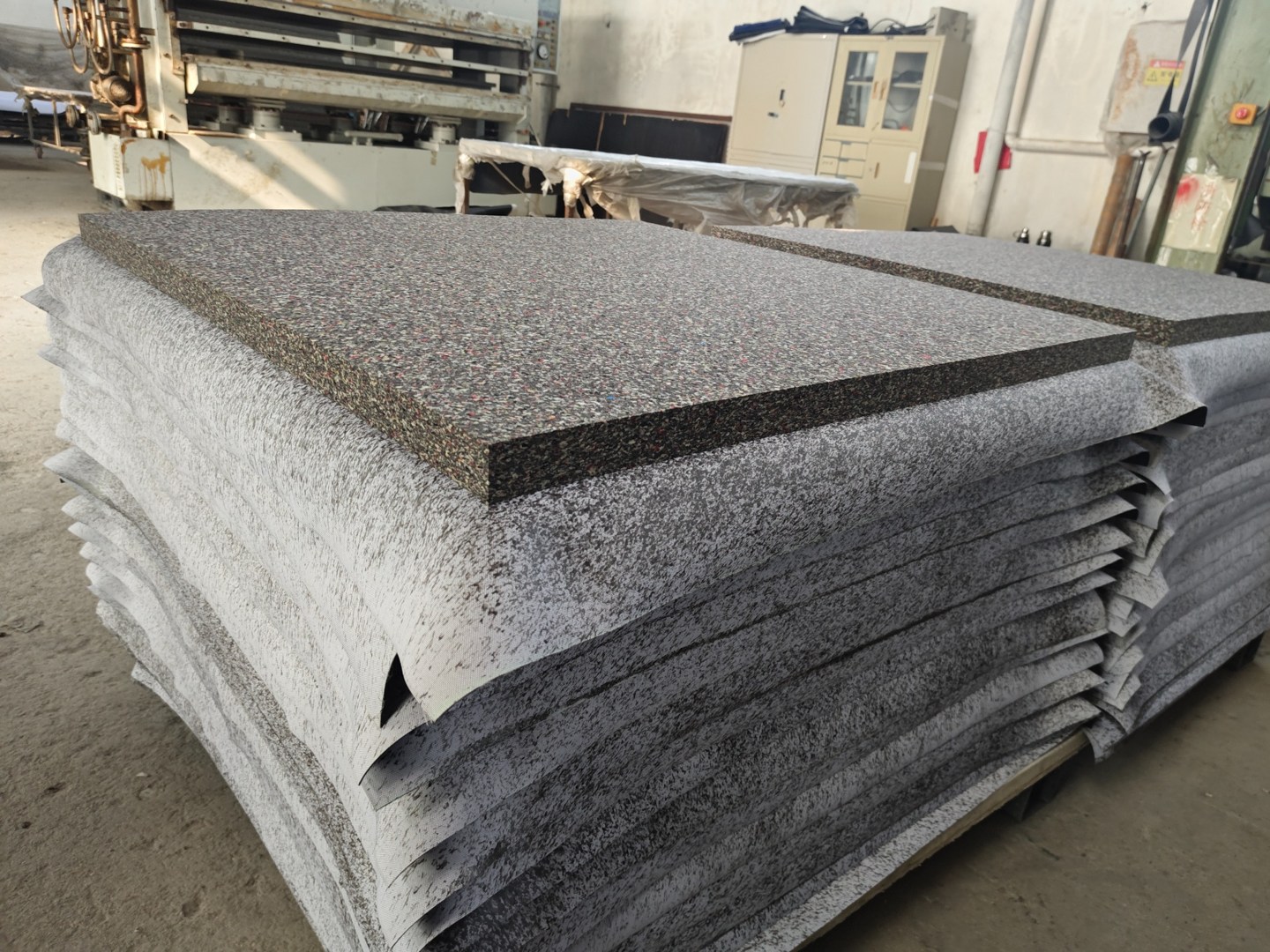
The compressed foam before it goes into the finished mat.
Look at the edge of the PVC cover, especially where it wraps around a corner. A thin, hollow-backed cover can look much like a solid one from above. At the cut edge, the difference is easier to see. I use a solid PVC cover for this model because the corners and edges take a lot of handling. If you move or restack your mats often, this is one place I’d look closely for early cracking or tearing.
Put the two surfaces under the same light and run your fingertips across them. Some tatami patterns look rough at first glance but have very shallow embossing. Ours has a deeper, more clearly defined pattern. I like to show it up close so you can see the finish you’re paying for. For grip, try both samples during the footwork you actually teach. If you’re choosing tatami mats for BJJ, also see how the surface feels against bare skin during ground work.
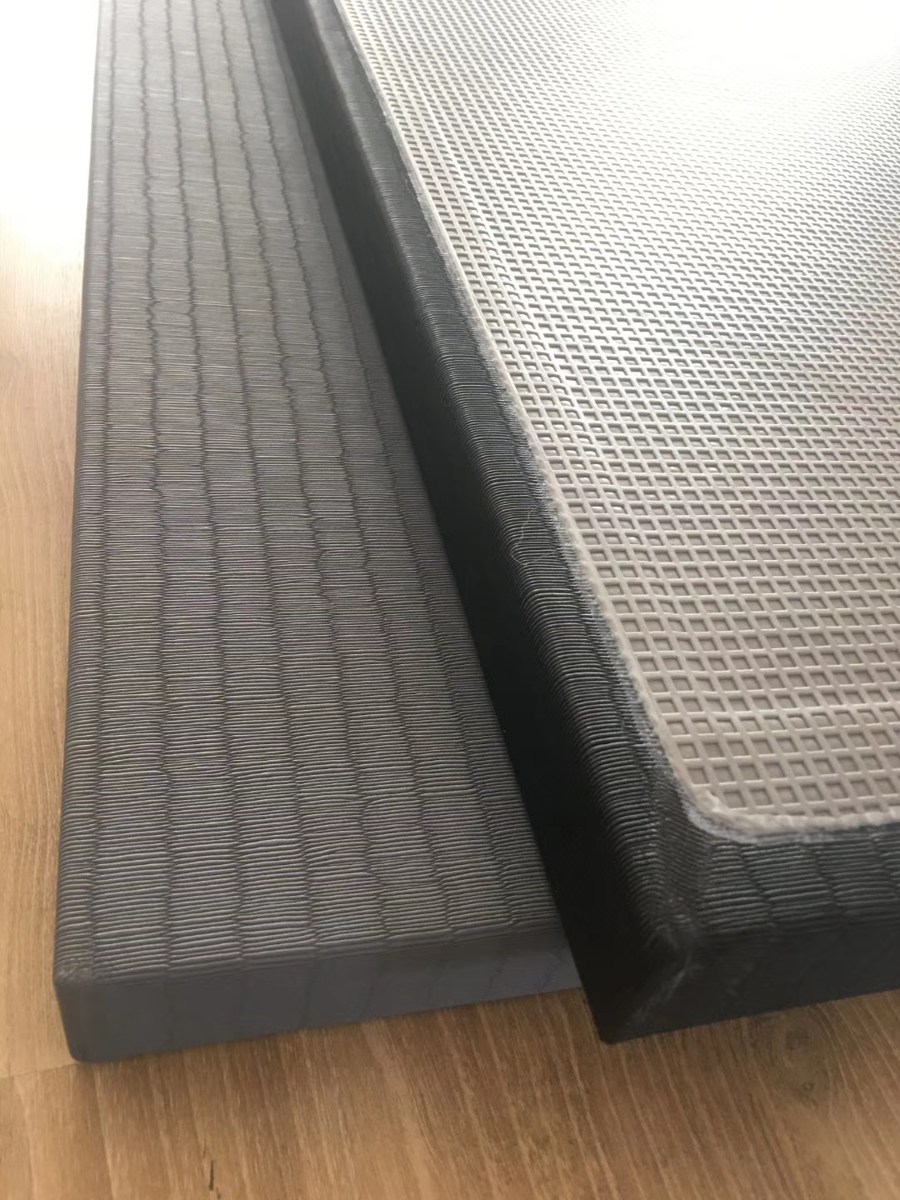
The tatami surface alongside the backing.
The gray grid in our photos is rubber coating applied to a nonwoven fabric. Two backings can feel equally thick in your hand. One can get most of its thickness from the fabric, with very little rubber on top. That’s a cost difference you can miss if you only look at the edge. On our samples, I’ll show you the rubber coating itself and how it covers the backing. If you’re comparing how much the mats move, try them on the same kind of subfloor.
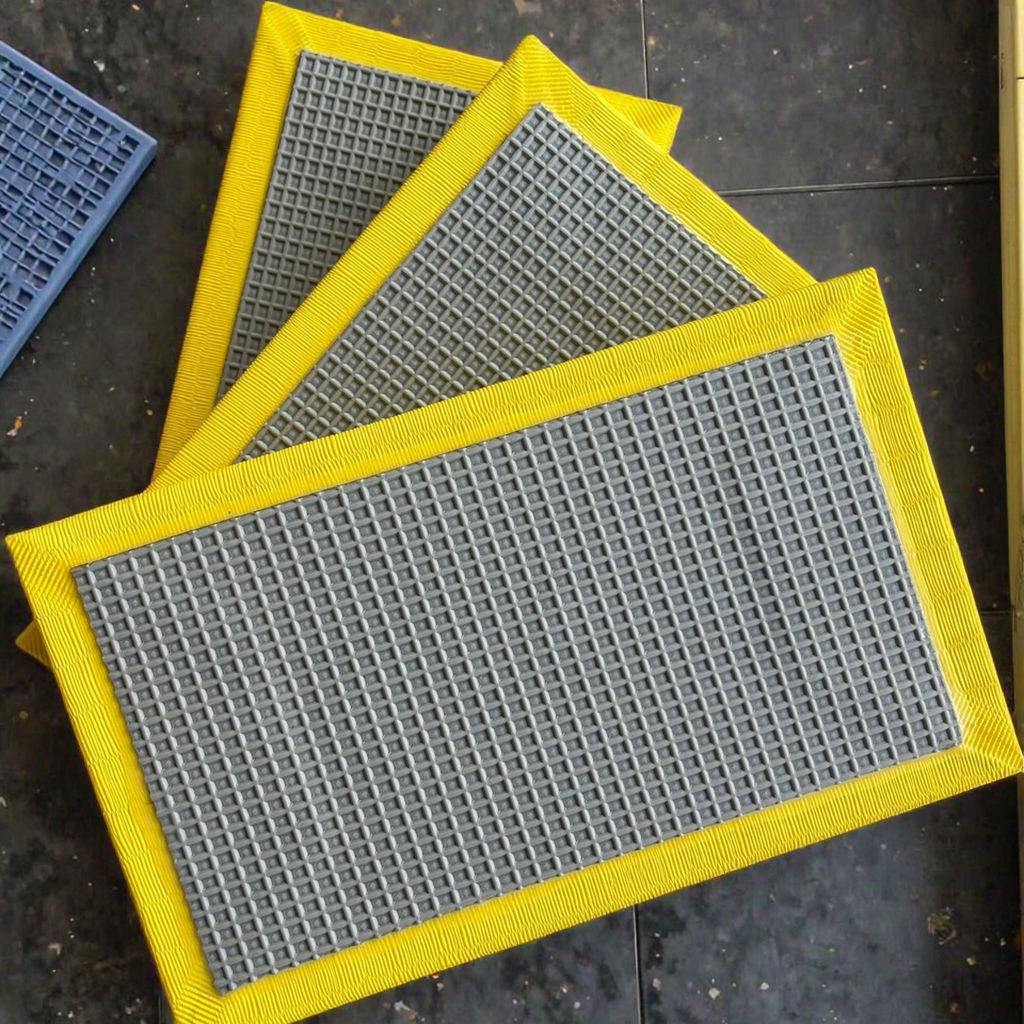
 A closer look at the backing on our samples.
Here’s where I’d hand you the cutaway. Look where the PVC meets the foam. If the cover is already lifting at the cut edge, ask the supplier to show you another sample and explain how the layers are bonded. A weak bond can let the cover pull away and wrinkle as the mat is used. That can shorten its useful life even if the surface looked fine when you bought it. Keep the sample you approve so you have a reference when the order arrives.
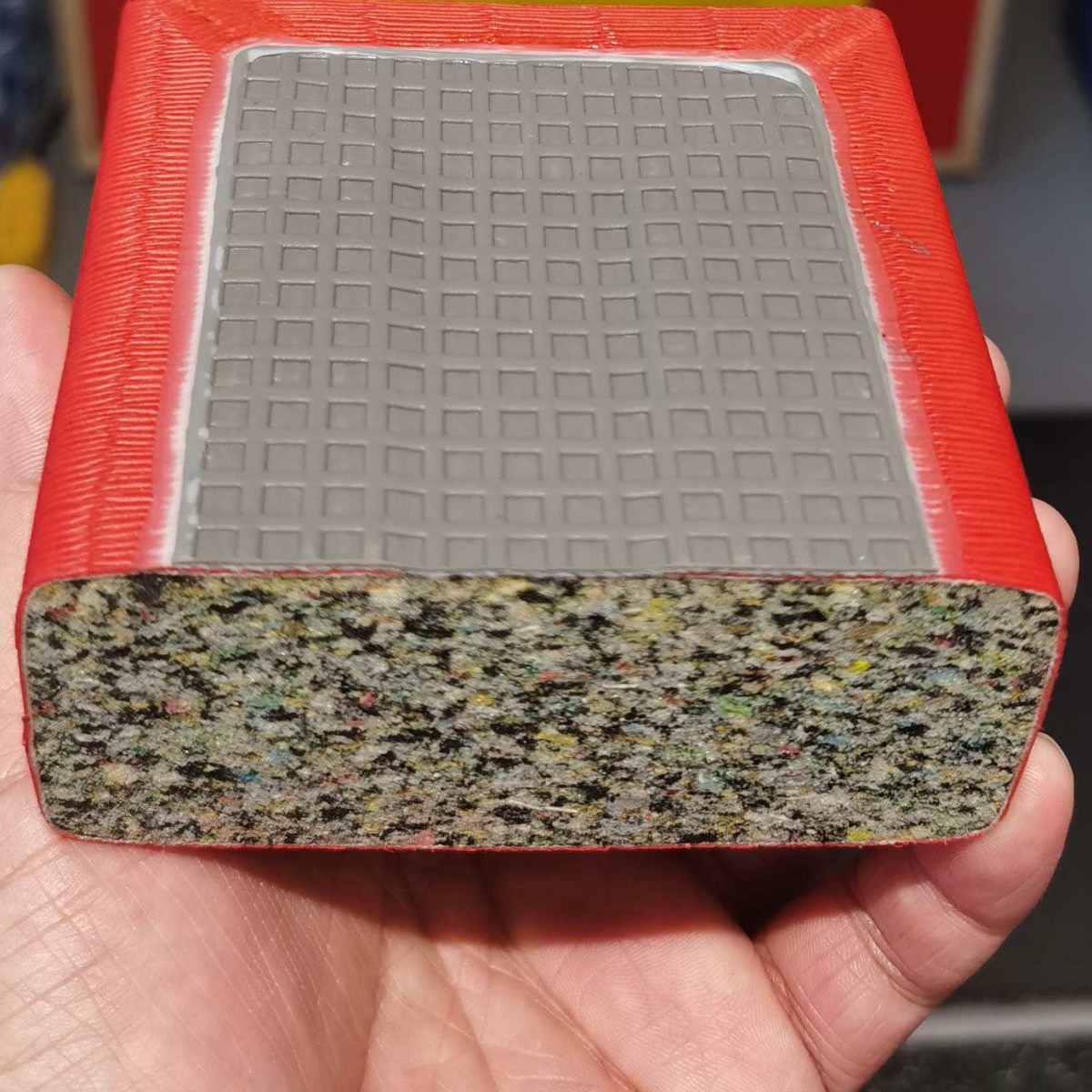
A cutaway of our sample showing the foam, cover, and backing.If my quote comes in higher, I’d show you where the difference is on the mat: the finished thickness, the compressed foam, the solid cover, the rubber coating, and the way the layers are put together. Those details are worth comparing before you pay for a whole floor. If a lower quote gives you the same construction and fits your training and layout, it may be a good buy. I’m happy to go through both specifications with you and explain what I’m quoting.
When you compare judo mat prices from different suppliers, give everyone the same floor dimensions and delivery ZIP code. Compare the delivered price for the same coverage and ask about replacement panels. A per-panel price is useful once you know how many panels you’ll actually need. If you’re also looking at EVA puzzle mats, a judo throw mat, or a wrestling mat, tell me what you’re planning to do on the floor. Each deserves its own quote and a look at the proposed setup.
Have a floor plan or a quote you’re working through? Send me your room dimensions, what you teach, and your delivery ZIP code. A phone photo and rough measurements are fine to start. I can walk through the layout with you, show you the mat construction, and help you work out what to ask before you order. If you’re still deciding, I’m happy to start with a sample.
 Martial Arts
 Striking
 Gymnastics
 November 04,2026
 September 27,2026
 March 04,2026
Copyright ©2023 All Rights Reserved by https://www.kenelmats.com